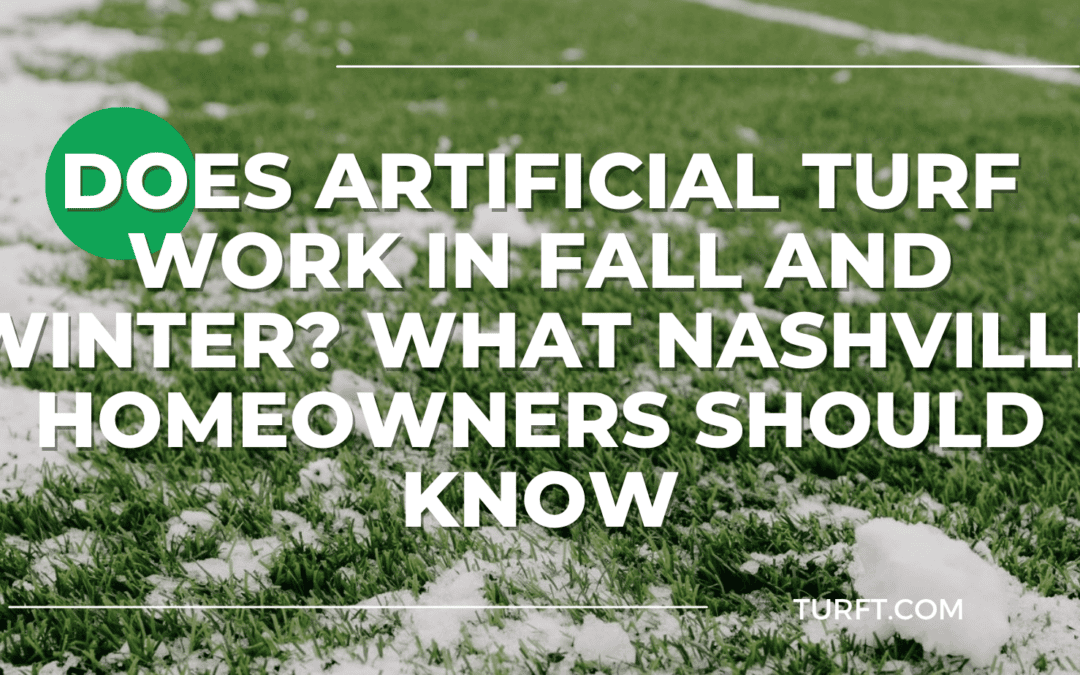
When temperatures start dropping across Middle Tennessee, many homeowners begin thinking about winter lawn care. Leaves cover the yard, natural grass starts slowing down, and wet weather can turn high-traffic areas into muddy messes.
That raises an important question for homeowners considering synthetic grass: Does artificial turf actually work during fall and winter in Nashville?
The short answer is yes.
Modern artificial turf is designed to handle changing weather conditions throughout the year, including rain, temperature swings, fallen leaves, and periods of limited sunlight. Unlike natural grass, synthetic turf does not go dormant or turn brown simply because the seasons change. With the right installation and a properly prepared base, it can provide a consistent, usable outdoor surface throughout the year.
At Turft, we install synthetic turf solutions designed for Middle Tennessee properties. If you’re considering a winter lawn alternative in Nashville or want a yard that looks great beyond the spring and summer growing season, here’s what you should know.
How Artificial Turf Performs as Temperatures Drop
Fall and winter in Nashville can bring a mix of conditions. One week may feel mild and sunny, while the next brings cold temperatures, heavy rain, or even the occasional freeze.
Natural grass responds to these changes by slowing its growth and changing color. Artificial turf works differently.
Synthetic grass does not rely on sunlight, soil nutrients, or seasonal growth cycles to maintain its appearance. The turf fibers remain in place regardless of whether temperatures are in the 70s or significantly colder.
That makes artificial turf year round a practical option for homeowners who want a consistent outdoor space.
Some of the biggest advantages during colder months include:
- No seasonal dormancy
- No winter mowing schedule
- No fertilizing or reseeding
- No brown patches caused by cold weather
- A consistent green appearance
- A durable surface for everyday use
- Less maintenance compared with natural grass
Our synthetic grass lawn solutions are designed to provide a lush, maintained appearance throughout the year, making them particularly appealing for homeowners who are tired of watching their natural lawn change dramatically with the seasons.
What Happens to Synthetic Grass During Heavy Fall Rain?
Rain is one of the biggest concerns homeowners have when considering synthetic grass in fall Tennessee.
After all, Middle Tennessee can see plenty of wet weather during the fall and winter. A beautiful lawn isn’t much use if it becomes saturated, muddy, or difficult to walk across every time it rains.
This is where proper installation becomes especially important.
Artificial turf is installed over a prepared base rather than directly over soil. A properly designed turf system allows water to move through the surface instead of sitting on top of the lawn.
At Turft, drainage is an important part of the installation process. Our installation approach includes proper base preparation and drainage considerations designed around the specific property.
The result is a lawn that can remain significantly cleaner and more usable after rain.
Why Drainage Matters
A high-quality turf installation should account for:
- Existing drainage conditions
- The property’s slope and grading
- Base preparation
- Water flow
- High-traffic areas
- Local soil conditions
- How the space will be used
This is one reason we always recommend working with an experienced installer rather than choosing turf based solely on the appearance or price of the grass itself.
The turf is only one part of the system. What’s underneath it matters just as much.
You can learn more about our Nashville turf installation process to see how we approach everything from design and base preparation to installation.
Does Artificial Turf Stay Green in Winter?
Yes. One of the biggest advantages of artificial turf is its ability to maintain a consistent green appearance throughout the year.
Natural grass can become dormant during colder months. Depending on the type of grass and weather conditions, your lawn may become less vibrant, thinner, or brown during winter.
Artificial grass doesn’t have a growing season.
The fibers don’t stop growing because there is less sunlight, because there has been a frost, or because temperatures have dropped. They remain the same color and height throughout the year.
For homeowners who take pride in their property’s appearance, this can make a noticeable difference.
Instead of looking out at a dormant lawn during the colder months, you can continue to enjoy a clean, green outdoor space.
This is particularly useful for:
- Front yards where curb appeal matters
- Backyards used throughout the year
- Homes with children or pets
- Outdoor entertainment areas
- Vacation homes
- Properties where natural grass struggles to grow
Our artificial turf solutions in Nashville are designed to handle the region’s changing climate while maintaining a consistent appearance.
How to Handle Leaves and Fall Debris
If there’s one thing artificial turf doesn’t eliminate in the fall, it’s leaves.
Trees don’t care whether your lawn is natural or synthetic. When autumn arrives, leaves and other debris will still find their way into your yard.
The good news is that cleaning leaves from artificial turf is generally straightforward.
A leaf blower is often one of the easiest ways to clear lightweight leaves from the surface. You can also use a soft rake or broom designed for synthetic turf when needed.
The key is simply to avoid letting large amounts of organic debris sit on the surface for extended periods.
Regular cleanup helps keep the turf looking its best and prevents leaves from accumulating in areas where they can mix with other debris.
Simple Fall Turf Maintenance
Your fall maintenance routine can be relatively simple:
- Remove fallen leaves regularly
- Clear branches and larger debris
- Rinse the surface when needed
- Address spills or stains promptly
- Check high-traffic areas periodically
- Keep surrounding landscaping maintained
Unlike natural grass, you won’t need to worry about mowing, reseeding, or applying seasonal fertilizer.
That means your fall lawn routine can focus more on keeping the surface clean and less on trying to keep grass alive.
Does Cold Weather Damage Artificial Turf?
Quality artificial turf is designed for outdoor use and exposure to changing weather conditions.
Cold temperatures themselves are not a reason to avoid synthetic grass in Nashville. The more important considerations are the quality of the turf system, installation, drainage, and the way the space is used.
Homeowners should also remember that artificial turf does not require the same winter preparation as a natural lawn.
You won’t need to:
- Overseed for winter color
- Apply winter fertilizer
- Mow dormant grass
- Repair muddy areas after every storm
- Wait for grass to recover from cold-weather stress
The turf remains in place and continues serving its purpose.
Of course, every property is different. A professional site evaluation can help determine what type of turf system and base preparation make the most sense for your specific yard.
Why Fall Is a Smart Time to Consider Turf
If you’ve been thinking about installing artificial turf, fall can be a great time to start planning.
For one thing, you’re able to see exactly what your existing lawn looks like as the growing season winds down.
Maybe certain areas become muddy every year. Maybe parts of the yard don’t receive enough sunlight. Maybe you’re tired of maintaining grass that never seems to look consistent.
Fall gives you a chance to identify those problems before another growing season begins.
It is also a good opportunity to think beyond the traditional lawn.
Ask yourself how you actually want to use your outdoor space.
Do you want a cleaner area for the kids to play? A more durable space for the dogs? A low-maintenance lawn that stays green year round? Or are you planning a larger backyard renovation that combines turf with recreation and entertainment areas?
Starting the conversation early gives you more time to think through the design instead of waiting until spring and trying to make decisions quickly.
Preparing Your Backyard for Year-Round Use
One of the biggest benefits of artificial turf is that it can change the way you think about your backyard.
Instead of treating the yard as something that looks good for a few months each year, you can design it around how you want to use the space throughout the seasons.
For example, a backyard could combine synthetic grass with:
- Outdoor seating
- Play areas
- Pet-friendly spaces
- Landscaping
- Walking paths
- Recreation areas
- Putting greens
- Synthetic game courts
The goal isn’t simply to replace natural grass with artificial grass. It’s to create a more functional outdoor environment.
For homeowners who want to take that idea even further, Turft also offers recreational solutions such as custom game courts and golf installations.
A backyard putting green, for example, can give golfers a reason to step outside even when maintaining a traditional lawn isn’t practical. Likewise, a custom game court can turn an underused portion of a property into a dedicated space for basketball, pickleball, tennis, or other activities.
The right combination depends on your property, available space, and how your family actually spends time outdoors.
Is Artificial Turf a Good Winter Lawn Alternative in Nashville?
For homeowners who want a consistent, low-maintenance lawn throughout the year, artificial turf can be an excellent winter lawn alternative in Nashville.
Instead of dealing with dormant grass, muddy areas, seasonal maintenance, and inconsistent color, synthetic turf provides a stable outdoor surface that can continue looking and functioning the same way throughout the colder months.
And the benefits don’t disappear when spring arrives.
You continue to get a lawn that requires significantly less mowing, watering, fertilizing, and general upkeep throughout the rest of the year.
That’s what makes artificial turf more than simply a seasonal landscaping solution. When properly designed and installed, it becomes a long-term part of the property’s outdoor environment.
Find the Right Nashville Artificial Grass Solution for Your Property
Fall and winter don’t have to mean putting your backyard on pause.
If you’re tired of watching your natural lawn change with every season, Nashville artificial grass can give you a more consistent and lower-maintenance alternative. From residential lawns to pet areas and larger outdoor recreation spaces, the right synthetic turf system can be designed around how you actually use your property.
At Turft, we help homeowners throughout Nashville and Middle Tennessee evaluate their outdoor spaces, select the right turf solution, and create installations built for local conditions.
Ready for a Year-Round Lawn?
If you’re considering artificial turf in Nashville this fall, now is a great time to start planning.
Contact Turft to schedule a consultation and explore a year-round synthetic turf solution for your Nashville-area property. We’ll help you determine what type of turf, installation approach, and overall design make the most sense for your space.
With the right plan, your backyard doesn’t have to disappear when summer ends. You can have a green, functional outdoor space ready to enjoy in every season.